How often do you reflect back on your playing days? When you do, what do you think about most? Looking back on my youth and high school experiences as an athlete my fondest memories are not the wins or trophies but are memories of being a part of a special team. A team that was tightly connected and had all members working together to reach a common goal. It’s what I miss the most about playing sports.
Now as a parent and a coach, it’s the one thing I want most for my kids and the athletes I coach to experience.
Deep down all athletes desire to be a part of something bigger than themselves and build a team that is “special.” Many people want to experience the joys associated with being on a team that is special but lack the knowledge of what it takes to build that special (GREEN) team.
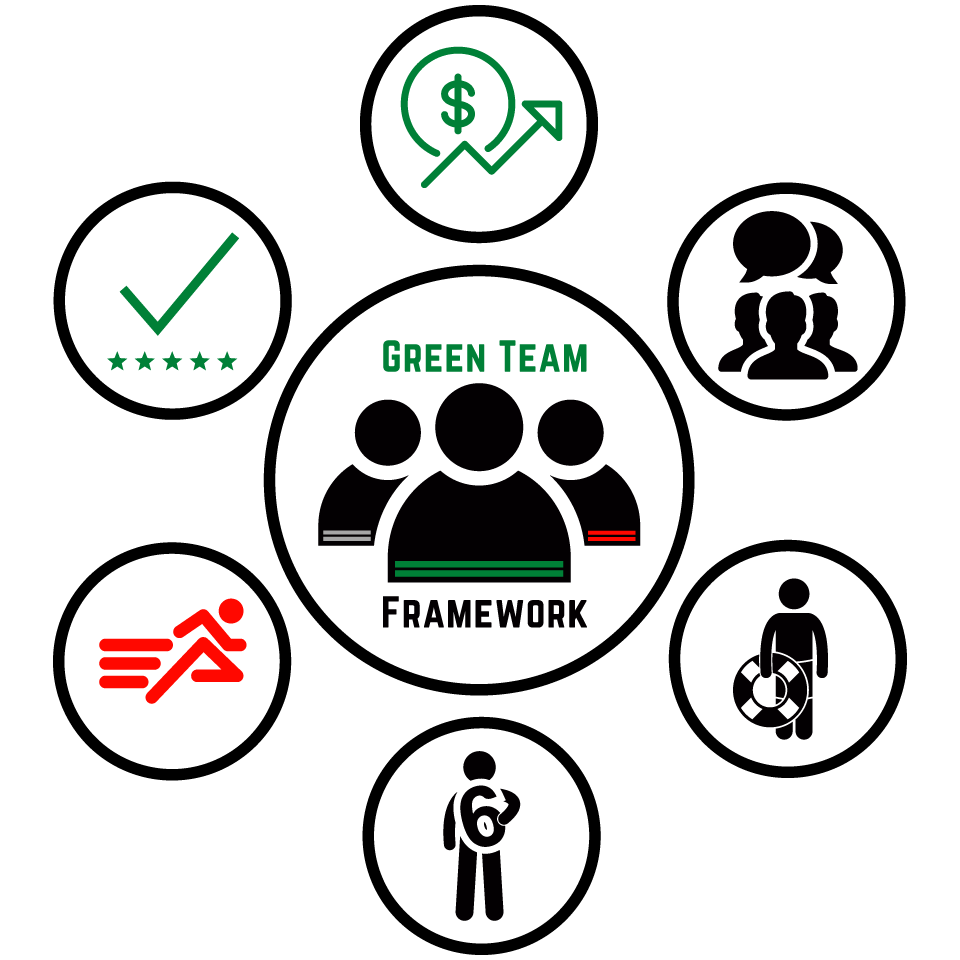
In our foundational exercise, The Green Team, we identify three areas in which all teams are broken into Green, Gray, and Red. Our goal is to get as many people operating in the Green as possible. As we say, building green is a daily responsibility.
But before we build green we must first identify and remove the red. Red teammates pose a great threat to our team, and if their behaviors are not identified and addressed the team will never become what it aspires to be.
Here are five of the biggest dangers Red players present and why we have to address them:
1. Red Players are Lazy
They lack energy, and effort, and make it difficult to get anything accomplished. These team members make you feel like you’re pulling teeth to get them to do anything. The laziness of the red players doesn’t allow the team to get in the quality reps needed. Instead of spending time focusing on mastering a skill or concept, the coach has to spend time prodding for effort. The team will never reach the next level when coaches are constantly coaching effort rather than technique.
2. Red Players Produce a Toxic Environment
They are energy vampires who suck the life out of team members. Red players are constantly complaining; they’re not happy unless they’re unhappy. Teammates in the red are rude and arrogant towards others. They put teammates down in order to lift themselves up. Red players have everyone walking on eggshells because no one wants to be the one who sets off their toxic attitude. All of this produces an environment no one wants to be a part of.
3. Red Players Reduce the Team’s Leadership
All it takes is a couple of bad apples to ruin the entire bunch. When red players are allowed to exist within the team, leadership falls to the wayside. Why? Because team members will shy away from stepping out to lead knowing their leadership is not going to be received by people in the red. You cannot have great leadership if you don’t have teammates willing to be great followers. It’s why we teach Rotational Leadership and our Followership exercise series. Red players don’t want to be led, and any attempt to lead them will be met with fierce resistance.
4. Red Players are Uncoachable
They don’t take constructive criticism, or advice, and make the life of a coach miserable. Coaches lose their joy when they are met with consistent resistance. Red players are all about me and could care less about the team. They are more concerned with their playing time and stat line than they are the team’s progress and goals. Anything said by the coach seems to go in one ear and out the other. Every day is a struggle with players in the red, and over time this continual resistance and increased frustration will cause the coach to burn out.
5. Red Players are Great Recruiters
As the old adage goes, “Misery loves company.” It’s not enough for them to be unhappy, they have to bring others down to their level. Red teammates have poor body language at practice, in the locker room, and on the sidelines. They are constantly upset and want everyone to know about it. They criticize everyone and everything. It’s never their fault; it’s always someone else’s fault. And they are not quiet about it. They love to recruit and are great at it.
If we want to build a GREEN TEAM, we must first REMOVE THE RED. If left unchecked, red players will sink your team before you know it.
The goal of being a part of a special (GREEN) team will never be met if red is not removed.
Have fun and #LeadEmUp